📖 Once Upon a Time in Silicon Valley…
Before the world marveled at ChatGPT, before AI could draft emails, write code, or create art, there was a whiteboard in a quiet San Francisco office and a group of restless minds scribbling out their fears—and their hopes—for the future.
It was 2015, and something was stirring in the minds of the tech elite. Elon Musk, Sam Altman, Greg Brockman, Ilya Sutskever, and a few others had grown uneasy. AI was advancing rapidly—but behind closed doors. Corporations like Google and Facebook were racing to dominate the space, and the consequences of unchecked development felt… dangerous.
So they asked themselves: What if we built AI differently?
Thus, the idea of OpenAI was born—not as a company, but as a nonprofit research lab. Its mission? Bold and simple: to ensure that artificial general intelligence (AGI) benefits all of humanity.
With an initial commitment of $1 billion in pledged funding, OpenAI launched with radical transparency and open-source ideals. In a world chasing profit, they wanted to build AI for the people, not for shareholders.
🛠️ The Early Days of the OpenAI Empire
Back then, the idea of AI writing like a human seemed more science fiction than science. OpenAI’s team of researchers quietly began publishing papers, building tools, and experimenting with neural networks that could learn, speak, and respond like never before.
One of their first major splashes came with GPT-2 in 2019—a powerful text-generating model so good, OpenAI initially hesitated to release it publicly. The model could write convincing essays, poetry, and even fake news. It was a taste of what was coming.
But something else was happening behind the scenes.
OpenAI’s ambitions were growing—and so were the costs. Developing powerful AI models required immense computational power and access to cloud infrastructure that only major tech firms could provide. The nonprofit model wasn’t going to cut it.
So, in 2019, OpenAI made a dramatic pivot. It created a “capped-profit” company—OpenAI LP—allowing it to raise capital and attract partners without completely abandoning its mission. It was a controversial move, but a necessary one.
And then came Microsoft.
🤝 A Billion-Dollar Partnership
In 2019, Microsoft invested $1 billion in OpenAI and became its preferred cloud partner via Azure. This wasn’t just funding—it was infrastructure, scale, and a foot in the AI race.
With resources secured, OpenAI unleashed GPT-3 in 2020. It blew the doors off public expectations. Writers, developers, marketers, and students everywhere began experimenting with what felt like an actual conversation with a machine. The OpenAI Empire was no longer just an idea—it was a movement.
Then, in 2022, the world met ChatGPT.
🌍 ChatGPT and the Rise of the OpenAI Empire
ChatGPT became the fastest-growing consumer app in history, hitting 100 million users in just two months. It could summarize, brainstorm, write code, translate, and tutor. Suddenly, the average person could interact with AI—daily.
The OpenAI Empire exploded in size and influence. New products like DALL·E, Whisper, and Codex emerged. In 2023, OpenAI released GPT-4, and in 2024, GPT-4o, a multi-modal powerhouse that could understand images, voice, and text together.
OpenAI’s tools were now embedded in Microsoft Office, integrated into enterprise software, and powering hundreds of startups.
What began as an anti-corporate research lab had now become one of the most powerful tech entities on the planet.
🧠 Sam Altman: The Empire’s Steward
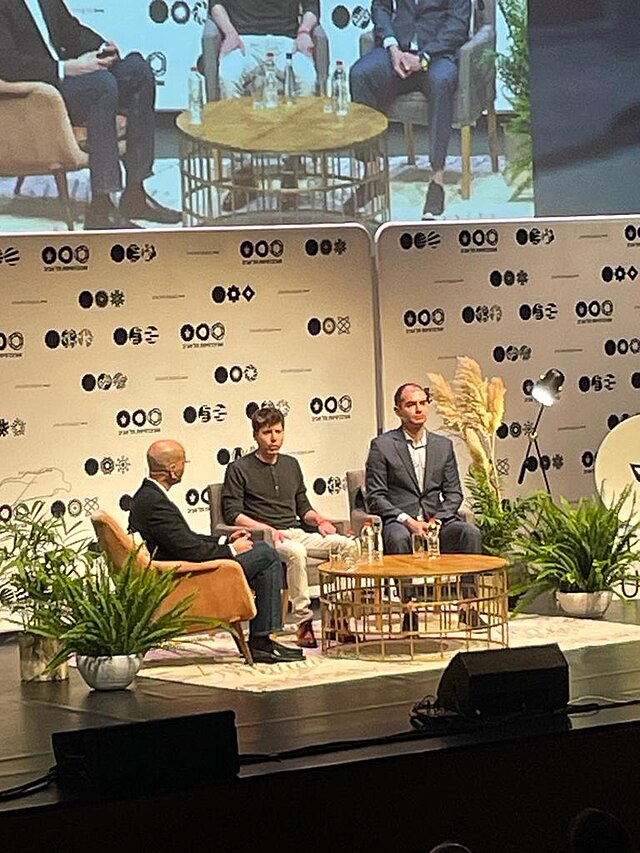
At the center of this empire is Sam Altman—the boyish-looking futurist who was once president of Y Combinator. Altman believes in AGI’s potential to elevate humanity—but he also acknowledges its risks.
He’s been a diplomat, strategist, and visionary. Under his leadership, OpenAI has grown while walking the fine line between idealism and industry.
His challenge now? Keeping the OpenAI Empire innovative, ethical, and—above all—safe.
🔮 The Future of the OpenAI Empire
Today, OpenAI is reportedly working on GPT-5, an AI app store, and even autonomous agents that can complete complex tasks without human prompts.
It has inspired fierce competitors—Google’s DeepMind, Anthropic’s Claude, Meta’s LLaMA, and Elon Musk’s xAI. But none have captured the public imagination quite like OpenAI.
And so, the question remains: Can the OpenAI Empire continue leading the future of AI, or will another force rise to challenge its throne?
📢 Final Thoughts
The OpenAI Empire started with a question—what if AI served everyone, not just the powerful?—and has grown into a force shaping how we learn, create, and interact with technology.
Its origin story is more than a tale of innovation. It’s a case study in how vision, collaboration, and adaptability can build something that changes the world.
And the story is far from over.
📢 What’s Your Take on the OpenAI Empire?
The story of the OpenAI Empire is still being written—by leaders, engineers, and everyday users like you.
💬 Do you believe OpenAI will continue to lead the AI revolution?
💡 Have tools like ChatGPT or DALL·E changed how you work or think?
👉 Share your thoughts in the comments below—we’d love to hear your perspective.
📬 And don’t forget to subscribe to BoardroomFiles for more deep dives into tech empires, startup legends, and the CEOs shaping tomorrow.